


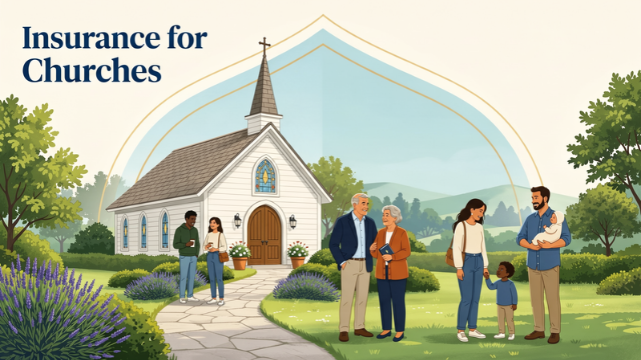
Insurance for churches helps protect a ministry’s property, people, leaders, finances, vehicles, and digital information. A typical policy package may combine several coverages instead of relying on one policy. The right mix depends on your congregation, property, employees, programs, vehicles, and state requirements. Church leaders should review coverage before renewal rather than accepting last year’s limits automatically. Building costs, attendance, programs, payroll, and technology can change during one policy term. Those changes can leave important risks uninsured or underinsured. Quick answer: Most U.S. churches should review general liability, commercial property, abuse and molestation, workers’ compensation, directors and officers, employment practices, auto, cyber, and crime coverage. Costs vary widely. Building value, location, attendance, payroll, ministries, claims history, and selected limits can all affect premiums.
| Coverage area | What it generally addresses | When it deserves attention |
|---|---|---|
| General liability | Visitor injuries and third-party property damage | Nearly every congregation |
| Commercial property | Buildings, equipment, furnishings, and certain losses | Churches owning or leasing property |
| Abuse and molestation | Claims involving sexual misconduct or abuse | Youth, childcare, counseling, and ministry programs |
| Workers’ compensation | Employee work injuries and illnesses | Requirements vary by state |
| D&O liability | Claims involving leadership and board decisions | Churches with boards or governing bodies |
| Employment practices | Employment-related claims | Ministries with paid staff |
| Commercial auto | Church-owned vehicles | Vans, buses, or ministry vehicles |
| Hired and non-owned auto | Rented vehicles and certain volunteer driving exposures | Churches using personal or rented vehicles |
| Cyber liability | Data breaches, cyber incidents, and recovery costs | Online giving, member data, and digital systems |
| Crime coverage | Theft, fraud, and employee dishonesty | Ministries handling donations and funds |
Key Takeaways
* Church protection normally requires several types of coverage. * Property limits should reflect realistic rebuilding costs rather than historical purchase prices. * Youth programs can create risks that need specialized liability protection. * Workers’ compensation rules differ between states and may include religious exemptions. * Online donations and member databases create cyber and privacy exposures. * Annual reviews should account for new programs, vehicles, employees, renovations, and contracts. * Comparing policy terms matters as much as comparing premiums.
What Does Insurance for Churches Usually Cover?


Insurance for churches commonly starts with general liability and property protection. These policies can address visitor injuries, property damage, fire, theft, weather losses, and other covered events. Policy wording, limits, exclusions, and deductibles determine how protection actually works. Many ministries need additional policies because church operations extend beyond weekly worship. Counseling, youth programs, childcare, schools, outreach, events, transportation, and paid employment introduce different exposures. A basic commercial package may not address each exposure adequately. Church leaders should review each ministry activity with a qualified insurance professional. They should also disclose changes accurately when requesting quotes. An incomplete application can make coverage comparisons less useful.
1. General Liability Insurance
General liability is a common starting point for church insurance. It may respond when a visitor suffers an injury or alleges third-party property damage. Legal defense costs can also be significant after a covered claim. Churches often host more people than their membership numbers suggest. Weddings, funerals, community meetings, food programs, and special events can increase foot traffic. Those activities can change the liability exposure throughout the year. Leaders should review occurrence limits, aggregate limits, exclusions, and deductibles. They should also ask whether outside events or facility rentals change coverage. Certificates and additional-insured requirements may apply when outside groups use church property.
2. Commercial Property Coverage
Property insurance can protect church buildings, furnishings, equipment, sound systems, instruments, and other insured property. Coverage normally depends on the causes of loss described by the policy. Flood, earthquake, wind, and other catastrophe exposures may require separate treatment. Replacement cost deserves close attention during every renewal. Construction prices can rise after renovations or regional disasters. An old building limit may be insufficient when reconstruction becomes necessary. Churches should maintain current property schedules and document significant improvements. Photos, inventories, appraisals, and purchase records can support the insurance review. Marketeral’s guide to construction insurance also explains how property-related risks can affect organizations.
3. Abuse and Molestation Coverage
Youth activities create responsibilities that general liability coverage may not fully address. Churches with nurseries, youth groups, schools, camps, counseling, or childcare should examine abuse and molestation coverage carefully. Leaders should never assume this protection is automatically included. Ask whether the policy has separate limits, exclusions, or reporting requirements. Review which employees, volunteers, ministries, and locations fall within the policy terms. Written screening and supervision procedures can also support stronger risk management. Insurance cannot replace safeguarding procedures. Background screening, two-adult policies, reporting procedures, training, and documented supervision remain important. Coverage and prevention should work together rather than separately.
4. Workers’ Compensation Insurance
Workers’ compensation can cover eligible employees who suffer work-related injuries or illnesses. Requirements for private employers are mainly administered through individual states. The U.S. Department of Labor directs private employers to their applicable state workers’ compensation programs. Religious organizations can face special rules or exemptions in some states. Clergy, teachers, volunteers, or other roles may receive different treatment depending on state law. A rule that applies in one state should not be assumed elsewhere. Payroll accuracy can affect insurance applications and workers’ compensation audits. Churches managing clergy compensation also face specialized payroll considerations. Marketeral’s church payroll services guide covers those operational issues for U.S. ministries.
5. Directors and Officers Liability
Church boards make decisions about finances, employment, property, programs, and governance. Directors and officers liability can address certain claims involving alleged wrongful acts by organizational leaders. It differs from general liability protection. Leaders should review who qualifies as an insured person under the policy. Pastors, officers, trustees, committee members, and volunteers may not receive identical protection. Policy definitions should match the church’s actual governance structure. Employment-related allegations may also require separate employment practices liability coverage. Wrongful termination, discrimination, harassment, and other workplace claims can create significant defense expenses. Churches with employees should review both areas together.
6. Commercial Auto and Volunteer Driving
Church vans and buses can create substantial liability exposure. Commercial auto insurance can cover church-owned vehicles subject to policy terms. Vehicle values, driver records, passenger capacity, and vehicle use can influence underwriting. Personal vehicles used for ministry activity create another issue. A church may need hired and non-owned auto coverage for certain rented vehicles or volunteer driving situations. The driver’s personal policy and the church’s policy may respond differently. Church leaders should maintain approved-driver procedures and current vehicle records. They should also clarify insurance requirements before trips or transportation programs begin. Written rules can reduce uncertainty after an accident.
7. Cyber Liability and Crime Coverage
Churches increasingly collect donations, personal information, payment data, and member records electronically. A cyber incident can interrupt operations or expose confidential information. Cyber liability policies may help with certain response, notification, recovery, and liability costs. Crime insurance addresses a different category of risk. Depending on the policy, it can address employee dishonesty, theft, forgery, or certain fraudulent transfers. Churches handling cash and electronic donations should examine both protections. Basic controls can reduce preventable losses. Ministries can use multifactor authentication, restricted account permissions, transaction approvals, backups, and staff training. These controls can also help insurers understand how the organization manages risk.
How Much Does Church Insurance Cost in the United States?
There is no standard national premium for every congregation. Insureon reported in 2026 a median general liability cost of about $42 per month for churches and religious organizations using its marketplace. It reports about $99 per month for a business owner’s policy. Those numbers are reference points rather than guaranteed quotes. Property value, location, payroll, attendance, claims, coverage limits, vehicles, and ministry activities can materially change premiums. Churches in catastrophe-prone regions may face different property pricing and deductibles. Larger programs can also cost more because they combine multiple policies. A ministry with a school, daycare, several buildings, and transportation presents different risks from a small congregation. Comparing final policy terms is more useful than comparing one headline price.
What Factors Affect Church Insurance Premiums?
Insurers usually examine the operations they are being asked to cover. A detailed application gives underwriters more information about the congregation and its exposures. Missing information can delay quotes or produce comparisons that do not match the ministry. Common rating and underwriting factors include the following.
* Building age, construction, condition, and replacement value. * Geographic location and catastrophe exposure. * Attendance and annual visitor volume. * Payroll and number of employees. * Youth, school, daycare, or counseling programs. * Church-owned vehicles and driver history. * Previous insurance claims. * Selected limits and deductibles. * Facility rentals and special events. * Cybersecurity and financial controls.
Churches should update insurers after major operational changes. New construction, transportation programs, employees, or childcare services can alter the risk profile. Marketeral’s broader insurance section provides related risk and coverage information.
How to Compare Church Insurance Quotes
Start by giving each insurer the same information. Different applications make premium comparisons misleading. Prepare property values, payroll, vehicle schedules, program descriptions, claims history, and current policies before requesting proposals. Then compare more than the annual premium. Review deductibles, sublimits, exclusions, valuation methods, endorsements, and policy definitions. A cheaper proposal may offer materially less protection. Use this checklist when comparing proposals:
1. Confirm insured buildings, organizations, and locations. 2. Compare property valuation and rebuilding limits. 3. Review liability limits and umbrella options. 4. Check abuse and molestation coverage separately. 5. Review D&O and employment-practices terms. 6. Confirm auto and volunteer-driver protection. 7. Compare cyber and crime limits. 8. Review exclusions and significant sublimits. 9. Check deductibles for catastrophe-related losses. 10. Confirm claims-reporting requirements.
Your church may also depend on contractors, technology providers, maintenance companies, or other vendors. Written contracts can affect insurance responsibilities and certificates. Marketeral’s supplier evaluation guide offers a useful framework for reviewing outside service providers.
Church Insurance Review Example
Consider a growing congregation that recently added a weekday childcare program. It also purchased a van and started accepting online donations. Renewing the old property and liability package without review could leave new exposures unaddressed. The church should now discuss childcare liability, abuse coverage, auto protection, workers’ compensation, cyber risks, and updated property values. Leadership should also review driver procedures and employee classifications. This example shows why annual renewals should examine operations, not only premiums.
When Should a Church Review Its Insurance?
A yearly renewal review is a useful minimum. Churches should also review insurance after major purchases, construction, staffing changes, or new ministry programs. Waiting until renewal can leave a new exposure unexamined for months. A review is also sensible after a significant claim. The event may reveal outdated limits, documentation problems, or missing policies. Leaders can use the experience to improve both coverage and internal procedures. Board members should document major insurance decisions when appropriate. The record should explain important changes and unanswered questions. That process can support better continuity when leadership roles change.
Build Coverage Around the Ministry You Actually Operate
The right insurance program should reflect how your church works today. Review the people, property, ministries, vehicles, technology, employees, and contracts that create real exposure. Then compare policy wording and limits before focusing on price. Bring your current policies, property values, payroll, claims history, vehicle information, and program details to the review. Ask an appropriately licensed insurance professional to explain exclusions and significant coverage gaps. A well-prepared review can help church leaders make clearer decisions before the next renewal. —
Frequently Asked Questions
Is insurance for churches required by law?
Insurance for churches is not governed by one universal federal requirement. State laws can require certain coverage, such as workers’ compensation or auto insurance. Contracts, lenders, landlords, denominations, and other organizations may also impose insurance requirements.
Does a church need general liability insurance?
Most congregations should consider general liability because visitors and ministry activities create third-party injury risks. A person can be injured during worship, an event, or another church activity. Actual coverage needs depend on operations and policy terms.
Does general liability cover sexual abuse claims?
Church leaders should not assume that it does. Abuse and molestation coverage may have separate limits, endorsements, exclusions, or underwriting requirements. Ask the insurer for written confirmation of how the policy handles these allegations.
Does a small church need cyber insurance?
Size alone does not eliminate cyber exposure. A small congregation may still store member details, process donations, use email, or maintain financial accounts online. Cyber coverage may be worth reviewing when those systems are important to daily operations.
Are churches automatically tax exempt?
Churches meeting Section 501(c)(3) requirements are generally considered tax exempt without applying for IRS recognition. In its 2026 guidance, the IRS states that qualifying churches are not required to obtain formal recognition. Tax status does not remove the need to manage operational and insurance risks.