
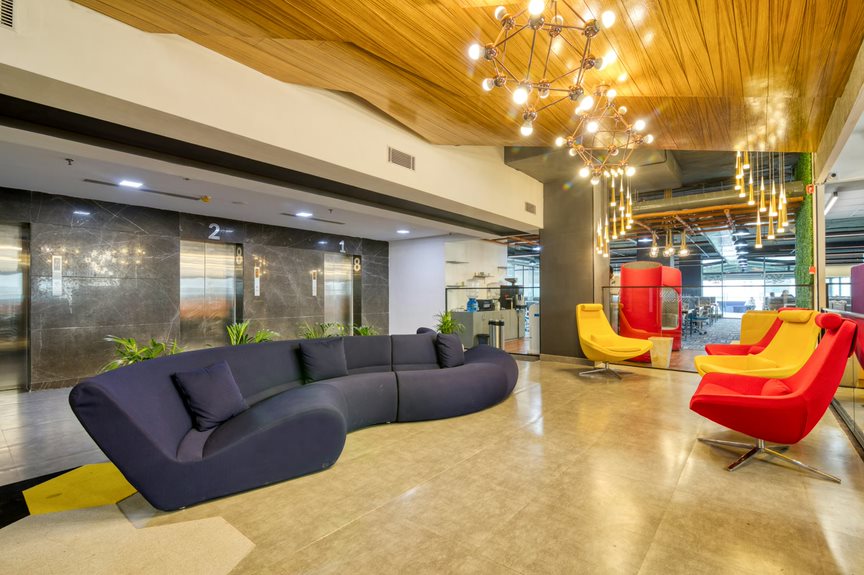
What does your office space say about your company? As the modern workplace evolves, interior design has become a pivotal factor in shaping the employee experience. No longer merely an afterthought, office environment design now significantly boosts productivity, nurtures collaboration, and supports overall well-being.
From integrating natural elements to adopting flexible layouts, the latest office design trends showcase a deeper understanding of how physical spaces influence work quality and creativity. In this blog post, we explore the most impactful trends in office interior design that are transforming workspaces worldwide. Continue reading to discover these innovative ideas!
1. Biophilic Design
Biophilic design emphasizes incorporating natural elements into the workspace to create a strong connection between indoors and outdoors. Adding plants, maximizing natural light, and including water features improve air quality and reduce employee stress.
More offices are installing green walls, indoor gardens, and large windows to “bring the outside in.” This approach not only enhances workspace aesthetics but also fosters a healthier and more satisfying environment for employees.
2. Flexible Workspaces
The rise of hybrid and remote work has accelerated the adoption of flexible office designs. With employees dividing their time between home and office, companies are crafting adaptable spaces that accommodate varied work styles. These include hot-desking areas, collaborative zones, and quiet rooms for focused tasks.
Providing freedom to choose workspaces enhances autonomy, motivation, and productivity among employees.
3. Ergonomic Furniture
As employees spend extended hours at their desks, ergonomics has become a cornerstone of office interior design. Modern workplaces prioritize adjustable desks, ergonomic chairs, and supportive furniture that encourage proper posture and reduce discomfort.
Investing in ergonomic solutions lowers health-related issues, which translates to reduced absenteeism and improved overall efficiency.
4. Technology Integration
Integrating advanced technology within office interior design is critical in today’s digital era. Workplaces are adopting smart solutions to streamline operations, boost communication, and elevate employee experiences.
Features like wireless charging stations, interactive digital whiteboards, and state-of-the-art video conferencing equipment are becoming standard. These innovations simplify workflows and help companies remain competitive in a technology-driven landscape.
5. Collaborative Spaces
Collaboration fuels innovation, and office designs increasingly reflect this by fostering teamwork and creativity. Open-plan work areas, breakout rooms, and informal meeting spaces encourage spontaneous discussions and idea-sharing.
Such environments facilitate dynamic brainstorming sessions that often lead to groundbreaking solutions and business growth.
6. Sustainability
Sustainable office design is becoming a top priority as companies embrace eco-friendly practices. Utilizing recycled and renewable materials, energy-efficient lighting, and waste reduction initiatives are key components of green office interiors.
This commitment not only supports environmental stewardship but also appeals to employees who value corporate responsibility. Demonstrating sustainability enhances brand reputation and attracts forward-thinking talent.
7. Personalization
Employees today seek a sense of belonging in the workplace. Personalization in office design empowers team members to express their individuality while fostering a positive atmosphere.
Allowing employees to personalize their workstations and incorporating company culture elements into the design create a welcoming space that boosts morale and engagement.
8. Wellness-Focused Design
Mental health and wellness have become central in workplace design. Offices now integrate relaxation zones, meditation rooms, and spaces for physical activity to support employees’ well-being.
Prioritizing access to natural light and fresh air, these wellness-oriented designs contribute to improved morale, reduced stress, and enhanced productivity.
Embracing these current office interior design trends—biophilic design, flexible workspaces, ergonomic furniture, and sustainability—enables organizations to craft environments that boost productivity, foster collaboration, and prioritize employee health. As remote and hybrid work models become established, thoughtful interior design is essential to supporting diverse workstyles and nurturing creativity.
Companies investing in these innovative design strategies create vibrant workplace cultures that attract top talent and inspire innovative thinking, paving the way for continued success and growth.
Additionally, if you want to learn more about Cost-Effective Strategies for Custom Office Workstations, visit our comprehensive Office category for expert insights and resources.
Beyond these trends, enhancing office acoustics is gaining attention as a vital factor in workplace design. Acoustic solutions such as sound-absorbing panels, white noise systems, and strategically placed partitions help reduce distractions and improve concentration. A well-balanced acoustic environment contributes to employee comfort, productivity, and overall job satisfaction. Incorporating acoustic design elements alongside the latest interior trends creates a holistic workspace that supports diverse employee needs in today’s dynamic work environments.


