
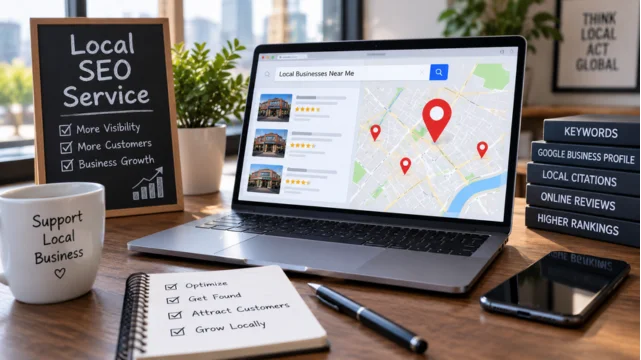
Choosing a local SEO service should start with scope, not ranking promises. U.S. businesses need work that improves map visibility, search presence, and qualified leads. The right provider connects profile management, website improvements, reviews, citations, and meaningful measurement. A strong local search campaign improves how nearby customers discover and evaluate your business.
It should cover your Google Business Profile, website, listings, reviews, local content, and reporting. Costs vary by competition and location count, so compare deliverables and measurable outcomes before signing a contract.
Local Search Services at a Glance
| Local SEO Service Area | What a Provider Should Handle | Useful Outcome |
|---|---|---|
| Google Business Profile | Categories, services, hours, photos, profile accuracy | Better visibility and customer information |
| Website optimization | Service pages, location pages, internal links, technical basics | Stronger organic local relevance |
| Citations | Business listings and NAP consistency | Consistent business information |
| Reviews | Review the acquisition process and response guidance. | Greater customer confidence |
| Local content | Useful service and location-focused pages | More relevant search entry points |
| Reporting | Rankings, calls, leads, forms, and conversions | Clearer business impact |
Key Takeaways
- Treat local search as an ongoing customer-acquisition channel, not a one-time profile update.
- Compare agencies by specific monthly work, reporting, ownership, and realistic expectations.
- Google says local ranking primarily considers relevance, distance, and prominence.
- Published 2026 agency pricing commonly spans several hundred to several thousand dollars monthly.
- Avoid providers promising guaranteed first-place rankings or instant Map Pack results.
What a Local SEO Service Should Include
A local SEO service should improve both your business profile and your website. Profile work alone leaves important search signals untouched. Website-only work can also miss valuable Google Maps opportunities. Your provider should begin with an audit covering profiles, pages, competitors, citations, and conversion paths. The findings should become a prioritized monthly plan. Each activity should connect to a business goal, not an arbitrary task count.
For broader customer-acquisition planning, Marketeral also covers strategies for attracting more customers and increasing sales. Search visibility works better when it supports a complete marketing plan. Traffic has limited value when the website cannot turn visitors into inquiries.
How Google Determines Local Visibility
Google says local results mainly depend on relevance, distance, and prominence. Relevance concerns how well a profile matches a search. Distance reflects location, while prominence reflects how established a business appears online. Google also recommends keeping business information complete, accurate, and current. Reviews, links, directories, and normal organic search performance can affect prominence. Google’s Business Profile Help Center publishes its current local ranking guidance.
No agency can control a searcher’s physical distance from your business. A provider can improve relevance, prominence, website quality, and profile accuracy. That distinction matters when an agency discusses expected results.
Which U.S. Businesses Are Eligible and Good Candidates?
Storefront businesses commonly benefit when customers search before visiting a physical location. Service-area businesses can also qualify when they travel to customers. Examples include plumbers, cleaners, electricians, roofers, and other mobile service companies. Google requires eligible Business Profiles to represent businesses that interact with customers in person. Online-only businesses generally do not qualify for a Business Profile.
Google’s Business Profile eligibility guidelines, published in the same Help Center, explain the current requirements. Multi-location brands need separate attention for each eligible location. Pages, profiles, citations, and reporting should reflect real locations and service areas. Scaled templates should not replace useful location-specific information.
How Much Does Local SEO Cost in the USA?
U.S. pricing varies widely because campaign scope varies widely. A September 2026 SEO.com guide lists agency retainers from $501 to $3,000 monthly. One-time projects and larger multi-location campaigns may follow different pricing models. Current published services also show meaningful differences between providers. BrightLocal, for example, lists its fully managed service at $1,299 monthly. These figures provide comparison points rather than universal market prices.
| Monthly Budget | What to Examine Closely | Common Situation |
|---|---|---|
| Around $500–$1,000 | Profile work, citations, basic pages, reporting depth | Smaller or less competitive markets |
| Around $1,000–$2,000 | Ongoing content, reviews, on-page work, broader tracking | Competitive single-location businesses |
| Around $2,000–$3,000+ | Multiple locations, content production, links, advanced reporting | Competitive cities or larger campaigns |
Never evaluate price without deliverables. A cheaper plan can cost more if important work remains undone. An expensive proposal also needs clear justification through scope and expertise.
How Long Should Results Take?
Local search improvement is usually gradual because several signals change over time. Competition, starting position, market size, and website condition influence progress. New businesses may face different challenges than established companies. BrightLocal currently states that many clients see ranking or traffic improvements within four to eight weeks. It says larger inquiry and revenue gains commonly develop over three to six months. Treat any published timeline as a planning range, not a guarantee.
Providers should explain what they expect to improve first. Early work may focus on profile accuracy, technical problems, and weak pages. Later work may address reviews, authority, content gaps, and competitive terms.
Seven Questions to Ask Before Hiring a Provider
A proposal should explain who does the work and how success gets measured. Ask for specific deliverables rather than broad promises about visibility. Clear answers make competing proposals easier to compare.
- What will you change during the first 30, 60, and 90 days?
- Who owns our website, Business Profile, analytics accounts, and campaign data?
- How will you measure calls, forms, bookings, and other qualified leads?
- Which tasks are completed monthly, and which tasks happen only once?
- How do you handle citations, reviews, service pages, and location pages?
- What experience do you have with our industry and market type?
- What happens if performance stalls after the initial campaign period?
Businesses in regulated or specialized sectors should also check industry experience. A legal practice, for example, has different marketing concerns than a restaurant. Marketeral’s guide to marketing legal services shows why audience and specialization affect strategy.
Red Flags to Watch for in SEO Proposals
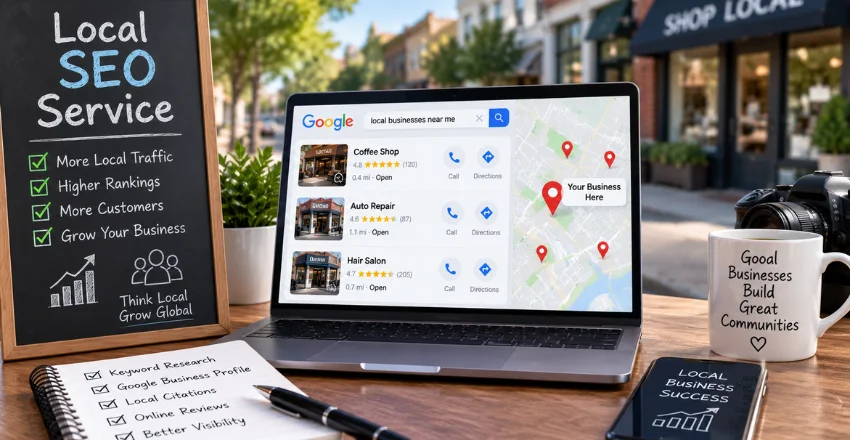
Strong providers explain their methods without pretending they control Google. They should also explain account ownership and reporting access. Avoid agreements that make performance impossible to verify independently.
Watch for these warning signs:
- Guaranteed number-one rankings for competitive searches.
- Guaranteed placement in Google’s Map Pack.
- Large quantities of low-quality directory submissions without review.
- No access to analytics or Business Profile accounts.
- Reports showing rankings without calls, leads, or conversions.
- Identical location pages created by changing only city names.
- Vague monthly retainers with no stated deliverables.
- Pressure to add inaccurate keywords to the official business name.
Google specifically states that businesses cannot request or pay Google for better local ranking. That makes guaranteed ranking claims especially questionable. A provider should sell competent work, not certainty it cannot control.
Measure Business Results, Not Only Rankings
Rankings can help diagnose visibility, but they are not the final business outcome. Track calls, forms, booked appointments, directions, and qualified sales opportunities. Compare these outcomes against campaign costs over meaningful periods. Reporting should also separate branded searches from non-branded discovery. Otherwise, existing customer demand can make campaign performance appear stronger. Providers should explain what changed and why the change matters.
Marketeral’s article on advanced marketing analytics offers a useful measurement principle. Marketing data becomes more useful when connected to customer stages. Apply the same thinking from search impression through lead and sale.
How to Compare Providers Before Signing
Start by giving each provider the same information about locations, services, goals, and current problems. Then request a written scope with monthly deliverables. This creates a fairer comparison than choosing from sales presentations alone. Next, compare ownership terms, communication frequency, reporting, cancellation rules, and expected responsibilities.
Check whether the proposal includes content, citations, technical fixes, and profile management. Ask which services require separate fees. Finally, choose the proposal that connects work to measurable business outcomes. Do not choose solely by the highest promised ranking. A sound plan should explain priorities, dependencies, risks, and reporting.
Your Next Step
Shortlist two or three providers and ask each for a written audit or proposal. Give every provider the same business information and target markets. Then compare scope, ownership, pricing, reporting, and assumptions side by side. Ask each company to identify the first three problems it would address. Their answers reveal whether the proposal reflects your business. Generic answers often indicate a generic campaign.
Do not sign until deliverables and account ownership are written clearly. Your website, profiles, analytics, and business data should remain accessible to you. A good working relationship begins with clear responsibilities on both sides.
Frequently Asked Questions
What does a local SEO service do?
It helps businesses improve visibility for searches connected to specific geographic areas. Work commonly covers Google Business Profile management, website pages, citations, reviews, and performance tracking. The exact scope should reflect competition, locations, and business goals.
How much should a small U.S. business budget?
Published 2026 pricing commonly ranges from several hundred to several thousand dollars monthly. The required budget depends on market competition, scope, and the number of locations. Compare what each quoted price includes before judging value.
Can an agency guarantee Google Maps rankings?
No provider controls Google’s ranking system or every factor affecting local results. Google says distance is one of its primary local ranking considerations. Be cautious when a company promises a fixed position or guaranteed Map Pack placement.
Is Google Business Profile management enough on its own?
Profile management can improve accuracy and customer engagement, but it is only one part. Google’s prominence signals can also reflect websites, links, reviews, directories, and organic search performance. Competitive businesses usually need coordinated profile and website work.
Should multi-location companies use one campaign?
Each legitimate location can have different competitors, searches, reviews, and performance. A shared strategy can create brand consistency. Execution and reporting should still account for each location individually.