

Most lists of side hustle ideas UK readers land on skip the bit that decides everything: what HMRC expects once the money starts arriving. The nine options below are ones people here genuinely earn from, each with a start-up cost, an honest monthly figure and its tax line. No survey apps paying 40p a go.
Reselling, pet care, tutoring and delivery pay fastest here, because they need almost nothing to start. Letting a spare room carries the highest tax-free ceiling at £7,500 a year. For most people, five to ten hours a week settles at somewhere between £200 and £800 a month once the work becomes regular. Elsewhere on the site, we look at Concordia University Student Wins Controlio’s $2,500 Scholarship.
What these nine ideas pay, and what they cost to start
Monthly figures assume five to ten hours a week and no existing audience. They are what a beginner can reach in three months, not what a full-time operator earns.
| Idea | What you need to start | Realistic monthly take | First payment | Tax position |
|---|---|---|---|---|
| Reselling on Vinted or eBay | Nothing, just things you own | £80 to £400 | 3 to 14 days | Selling your own clutter is not trading |
| Dog walking and pet sitting | £60 to £150 for insurance and kit | £200 to £600 | 1 to 2 weeks | Trading income |
| Private tutoring | A subject, a laptop, a DBS check | £300 to £900 | 2 to 4 weeks | Trading income |
| Food or parcel delivery | Bike or car, right to work check | £250 to £700 | Weekly | Trading income |
| Letting a spare room | A room and a lodger agreement | £400 to £900 | First month | Rent a Room, £7,500 tax free |
| Renting out your driveway | A listing on a parking app | £40 to £250 | Monthly | £1,000 property allowance |
| Freelance writing or design | Three portfolio pieces | £300 to £1,200 | 30 days after invoice | Trading income |
| Virtual assistant work | Laptop and £0 to £100 of tools | £300 to £1,000 | 14 to 30 days | Trading income |
| Weekend market or craft stall | £30 to £80 pitch fee plus stock | £150 to £500 | Same day | Trading income |
Key takeaways
- The £1,000 trading allowance is measured on gross income, never on profit.
- Rent a Room relief is a separate scheme worth £7,500 a year on a lodger.
- Vinted, eBay, Airbnb and the delivery apps already pass seller data to HMRC.
- The £3,000 reporting threshold has been announced, but it is not law yet.
- Register for Self Assessment by 5 October after the tax year you go over.
Start with the £1,000 rule, not with the idea
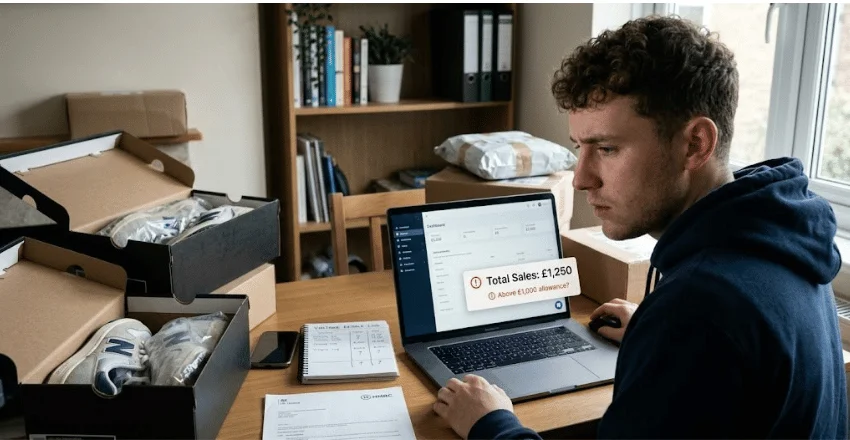
Pick your tax position first. HMRC guidance on tax-free allowances for trading income confirms you can take up to £1,000 in a tax year without telling them. That holds provided nothing else pulls you into Self Assessment. The catch sits in one word: gross.
Sell £1,400 of trainers after spending £900 on stock, and you have crossed the line, even though your profit was £500. The allowance looks at what came in. Almost every listicle gets this wrong, and it is the single most expensive mistake a new seller makes.
Two other changes catch people out. Digital platforms now hand seller details to the taxman. HMRC guidance on selling through a digital platform reports that the rules began on 1 January 2024. Nothing is passed on until you make 30 sales or take roughly £1,700 in a calendar year. Separately, ministers have announced a rise in the Self Assessment reporting threshold to £3,000.
That £3,000 figure is not in force. Plenty of blogs already write about it as though it were, which is worth knowing before you decide to stay quiet. The trading allowance itself stays at £1,000 either way.
Go over, and you register for Self Assessment by 5 October following the end of that tax year. Profit above the small profits threshold brings Class 2 and Class 4 National Insurance into the picture. Your return and any tax are due by 31 January.
Ideas that use a spare room, a driveway or your car
Assets beat hours. The three ideas here need no new skill, and two of them carry their own tax reliefs, which is why they sit at the top of the earnings table.
Rent a Room relief lets you take £7,500 a year from a lodger in your main home, tax free, or £3,750 each where the income is shared. A room in Manchester or Leeds commonly goes for £450 to £650 a month, so a single lodger can absorb most of that allowance. Short lets work differently: read the Airbnb commission and fee structure before you assume the nightly rate is what you keep, and check your mortgage, lease and council rules first.
Driveway letting is the quiet one. Near a station, a hospital or a football ground, a space earns £40 to £250 a month through a parking app, and the £1,000 property allowance usually covers it. Setting up takes about ten minutes.
Renting your car out through a peer-to-peer platform pays more, roughly £200 to £500 a month, though your insurance moves to the platform’s policy while it is booked. Check the excess before you list.
Side hustle ideas UK beginners can start this weekend
These four need no portfolio, no waiting list, and no upfront money worth the name.
- Reselling. Clear a wardrobe on Vinted first. Selling your own used possessions is not trading, so the money is usually yours. Buy stock to flip, and you have become a trader, with the £1,000 test applying from that point.
- Dog walking. Solo walks pay roughly £12 to £18 in most towns. Group walks change the maths completely, since three dogs in one hour turns £15 into £45. Public liability cover runs about £60 a year.
- Delivery. Evenings and weekends carry the surge pay. Take off fuel, insurance and the wear on your bike or car before you judge the hourly rate.
- Market stalls. A council pitch costs £30 to £80 for the day, and you find out in one Saturday whether anyone wants what you make.
Skill-based work that pays £30 an hour or more

Tutoring is the strongest hourly rate an ordinary person can reach quickly in Britain. Rates across England sit around £30 to £50 an hour, near £38 for GCSE level, and qualified teachers or 11-plus specialists charge more. Ten hours a month is a real £350.
Freelance writing, design and bookkeeping take longer to build but scale better, because a retainer client pays every month without a fresh pitch. Bookkeeping suits anyone already comfortable with numbers, and small firms hire for it constantly.
Remote admin support is the steadiest of the three. Businesses buy virtual assistant services for inbox triage, diary management and invoicing, typically at £18 to £30 an hour. Ten hours a week at that rate beats almost any gig app.
Your first five customers come from people who already know you. Post once in a local Facebook group, tell your WhatsApp contacts, and put a card through fifty doors on your own street. Marketplaces such as Upwork or Tutorful fill the gaps after that.
Check these three things before your first payment
- Your employment contract. You are rarely obliged to tell your employer, but exclusivity and conflict-of-interest clauses are common. Anything in the same sector as the day job deserves a conversation before the first invoice, not after.
- Insurance. Public liability cover starts near £5 a month and matters the moment you enter someone’s home or handle their pet. Home insurance rarely stretches to paid work.
- Licences and checks. Selling food means registering with your council at least 28 days before you trade. Tutoring under-18s means an enhanced DBS check. Driving passengers means a private hire licence.
Keep records from the very first pound

HMRC expects records even when you claim the allowance and owe nothing. A spreadsheet with the date, the customer, the amount in and the amount out is enough for the first year.
Open a separate bank account on day one. Mixing personal spending with takings turns a twenty-minute tax return into a weekend job. Good habits around managing your business expenses also protect the deductions you are entitled to. Keep receipts for stock and mileage, plus insurance and app fees.
One warning worth repeating. If you claim the £1,000 allowance, you cannot also deduct expenses against that same income. Work out both ways once a year and take whichever leaves you better off.
Where to go from here
Choose one idea from the table, set a simple income tracker, and watch the £1,000 line. Give it eight weeks of consistent hours before you judge it. That single decision, made properly, beats a bookmark folder of fifty options you never start.
If you want to know about 5 Digital Tools Every Small Business Owner Should Know About, then visit our Business category.
Side hustle ideas UK: frequently asked questions
£1,000 of gross trading income per tax year, under the trading allowance. Rent a Room relief sits on top of that at £7,500 for a lodger, and property income has its own £1,000 allowance.
Tutoring and bookkeeping, comfortably. Both clear £30 an hour once you have two or three regular clients, without stock, delivery or platform commission eating the margin.
Usually not, unless your contract says so. Regulated work in finance, healthcare or education is the exception. So is anything that competes with your employer.
Reselling what you already own, dog walking, and tutoring a subject you know. All three need under £100, and often nothing.
Yes. Marketplaces and booking platforms send seller data annually. Being reported is not the same as owing tax, though a mismatch with your return is what triggers a letter.